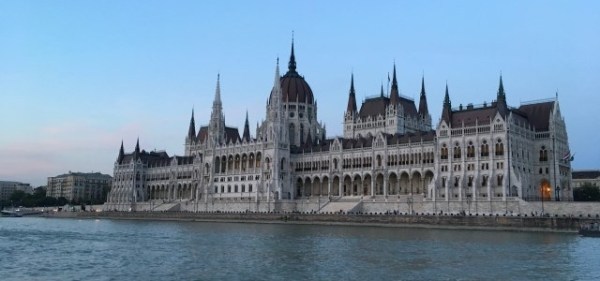
Buda(p)best, Hungary

Author: Jarik

The enthusiasm of two of our co-hikers, and now friends (Steven and Klaudia) of the gruelling Salkantay Trek in Peru, convinced us that we should include Hungary, and especially Budapest, their home city, in our itinerary.  Our travel plans for south eastern Europe were very flexible –  actually we did not have the faintest idea where we wanted to go. So, we decided to include an arc from Slovenia, through Hungary and Romania to reach Sofia, our final destination for this side of the world.

The third overnight train for our adventure delivered us to the centre of Budapest mid-morning, but too early to check in at our lodgings. The four kilometre walk from the station to where we could store our backpacks at an affiliated hostel turned out to be a great introduction to the city. Still abiding by MapsMe, that previously took us via non-existent paths in Croatia, we walked up the Buda Hill passing the Royal Palace, over the Chain Bridge, through List Square, along the State Opera House, St Stephen’s Cathedral and meandered through the Jewish District (now packed with street cafes and pubs). Unfortunately, the weight of our backpacks was such a distraction that we only realised that we had walked along all these landmarks when we recognised them during our guided walking tour later that afternoon!

We spent our first night in Budapest in a very basic apartment located above a “ruin bar”. These bars were the new occupants of dilapidated buildings in the historical Jewish District that were deserted after the Second World War. Dark doors set within derelict facades open up to waterholes with interesting décor that captivate the senses. Noisy places, especially at night. So we were glad to move to a spacious apartment located very centrally in the city the next day.

Budapest is a feast for the eyes and the tastebuds. Architectural masterpieces of large scale and grandeur line the banks of the Danube. Behind these, there are street upon street of ornate low-set buildings opening up to numerous beautiful squares filled with sculptures, fountains and restaurants. We opted for the “menu of the day” more than a few times. This gave you a selection of hearty and deliciously paprika laden traditional Hungarian dishes for about A$7 which went well with a dry Hungarian rosé.

We caught a tram to Margarit Island for our morning runs a couple of times. A five and a half kilometre synthetic running track takes you once around the island. It is clearly a favourite of the locals and a great inner-city facility.

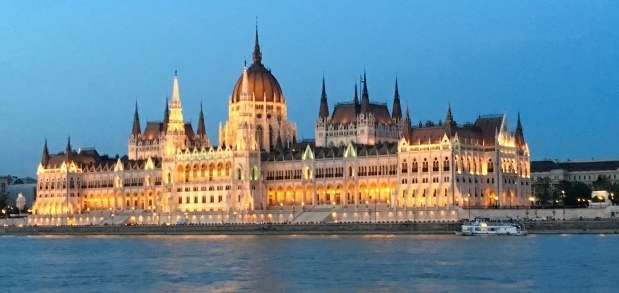
A “must do” in Budapest, is an evening dinner boat cruise on the Danube when the stately buildings are dressed in their finest, glowingly lit to accentuate their features. This was an excursion we could not afford on our tight travel budget, so we opted to catch a public ferry instead. The first ferry we attempted to board was jam packed and did not allow us on. We did, however, managed to board the last ferry of the night, which turned out to be just perfect. As we zig-zagged across the river, daylight faded and the buildings came to life in golden hues. Spectacular!
DA967611-EEEF-4744-B883-CBA2838ADF83

The evening of 20 August was even more spectacular. Hungarians were celebrating over a thousand years of nationhood and the capital city was the centre of the festivities. The streets were alive with people, the banks of the river a bustling hive of music and stalls. The evening culminated in a fireworks display rivalling a Sydney New Year extravaganza. Here we were, standing on the banks of the Danube amidst the crowds, Strauss’ famous Blue Danube waltz giving the cues for the exploding colour above us, majestic buildings bathed in light all around us. We are privileged.

– Jarik –


A Rare Find

Author: Jarik

When you have travelled overland through 11 countries, passed through too many cities, towns, villages and hamlets to number and completed more than 1100km of hiking and running, you get to see a lot of places. Some spectacular, some pretty and some very ordinary. We jokingly started referring to the Patagonian landscapes and hikes as ice-cream and that we have started with dessert as the first course of our travels. That was until we came to Slovenia.

653052C2-CAD6-415C-A2ED-747BE0F6EC74 (2)

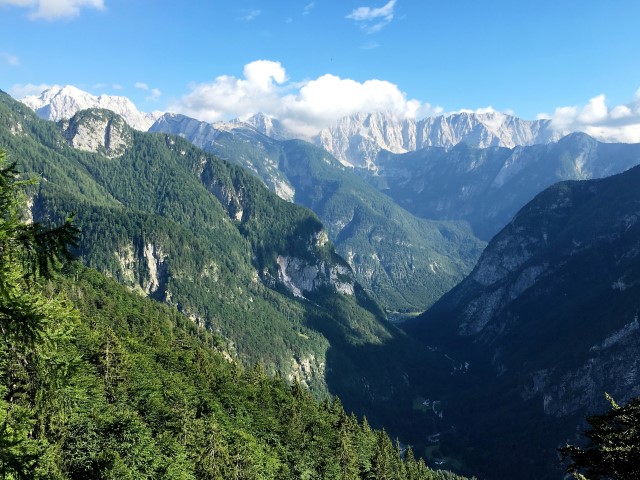
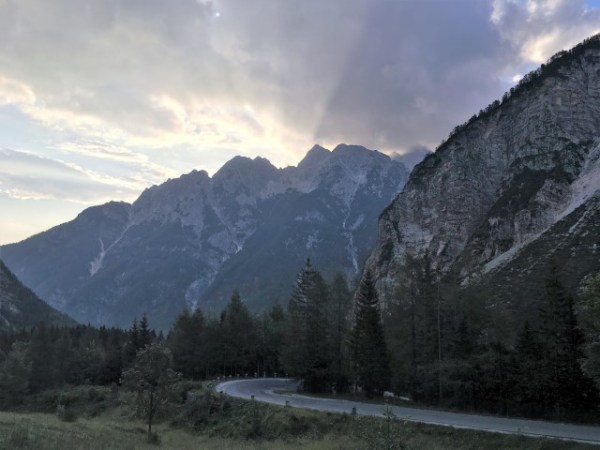
Only a speck of a country, Slovenia’s natural scenery is truly spectacular. It is also rich in cultural heritage, spanning thousands of years. The Julian Alps with its deep valleys, white cliffs, towering peaks, deep green forests and rivers that seem too clear to be real have been an absolute highlight in our travels. Our hike down the Soča River Valley was nothing short of breathtaking.

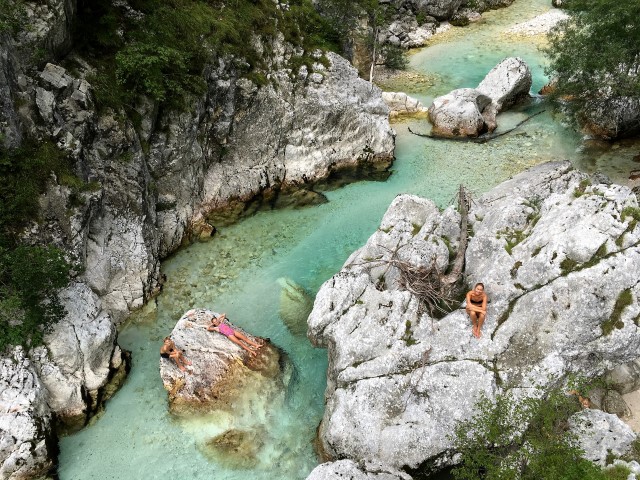
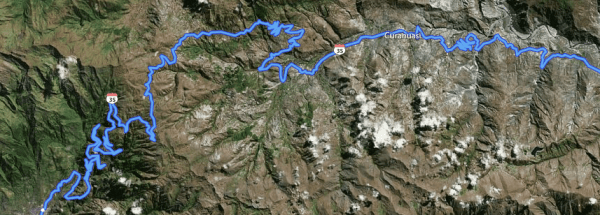
We had to conquer a mountain pass with fifty switchbacks (they were numbered) to get to the upper reaches of the river where we started our hike. For 18km we followed the water as it formed rapids and slowed into pools, narrowed into magnificent gorges cutting through limestone and broadened into inviting oases where we braved the icy waters for a swim. We crossed it many times over rickety suspension bridges as the river hugged the mountainside and shaped the valley as it went. We also hiked up to its source –  gushing from a cave high up in the mountains. Add to this dramatic landscape summer foliage that colour every meadow bight green and red geraniums to adorn every window and balcony, and you can start to imagine the Slovenian Alps.

4C59CCDD-072F-460F-8DB1-8798852F97D2 (2)

It seems as if the country straddles two worlds. The first, a peaceful lifestyle centred within quaint little villages not more than 5km from each other, but each with its own character. A lifestyle where there is still enough time to keep your own vegetable garden and make your own wine. This is juxtaposed within a Slovenia, connected by large freeways, fantastic communication infrastructure and with access to the best of every modern convenience.

We were off to the Slovenian part of the Istrian peninsula next – but we all hoped that we would have the opportunity to spend more time in this amazing part of the world again. Slovenia should be on everyone’s “must do” list – it will definitely remain on ours.

– Jarik –


Birthdays in Montenegro

Author: Jarik

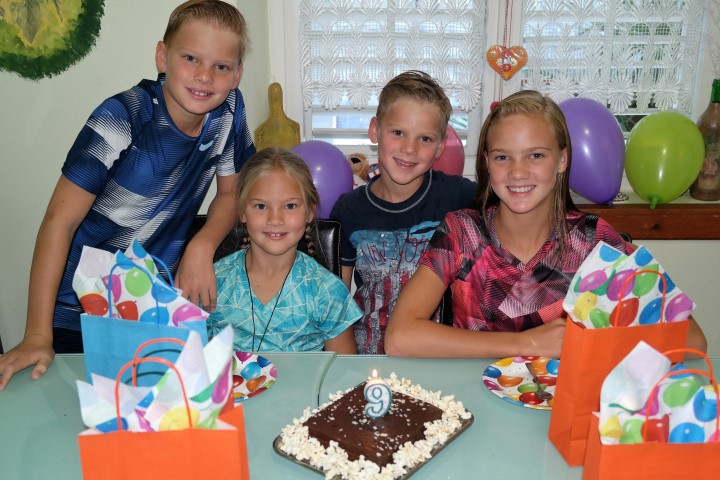
Birthday celebrations in the van Rensburg family start early in the morning. The birthday boy or girl has to be awakened by the harmonious voices of the rest of the family, then be whisked away to a breakfast of cake in a wonderland full of balloons and streamers before reading the selection of handmade birthday cards. Keeping to the tradition whilst on the road has been challenging, but we have managed thus far. We however changed country the day before Eulain’s birthday, which means everything we carry with us is reduced to the absolute minimum. This makes bus travel and border crossings much less of a hasstle. Unbeknownst to us, the little town we were heading to on the Bay of Kotor in Montenegro, was nothing more than three homes, a teeny-tiny shop and a ferry terminal – Lepetane. We chose it because you could apparently get connections from there to basically anywhere.

Because Eulain is a very early riser, we all got up before the crack of dawn to be able to catch her still asleep. Suitably surprised and after pouring over the cards (we all wrote her little poems), we very quickly moved on from the only cake we could find to a day full of adventure. (The cake was a somewhat stale wafer and chocolate-spread covered square that was high up on a shelf in the shop next door.) The adventure was to start with a hunt for decent cake in the waterside village of Perast on the other side of the bay.

SAMSUNG CSC

We crossed the bay with one of the ferries and walked to the local bus stop to wait for the next Blue-Line bus. After two hours in the sun and four buses going in the wrong direction, we gave up on the bus and decided to get something from the small supermarket and head back with the ferry to have lunch at our apartment. Our second attempt was to go to Kotor for cake in the afternoon. This time the Blue-Line bus stop was just 20 meters from our front door.

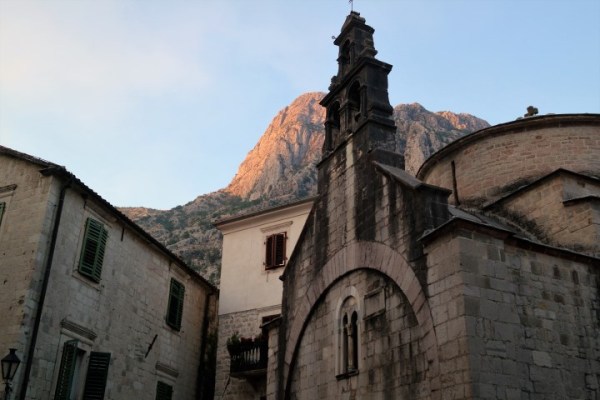
When the local lady that waited with us at the bus stop eventually waived down a taxi (after a good 90 minutes of waiting), we gave up all hope of catching a Blue-Line and basically hi-jacked the next taxi that we saw. Once in the beautiful old city of Kotor, Eulain and the other kids were rewarded with ice cream and the parents with a cold beer. We spent hours exploring the city in the magnificent golden glow of late afternoon light and ended the day with dinner in a square filled with the sound of street musicians. We took a taxi back home.

The next day was my birthday. Again we started with singing and cards when the night had just turned from dark to pale, but thankfully my surprise did not include cake from the little store next door. We started with a hike up into the mountains of the Vrmac peninsula. I was served breakfast in the shadow of an ancient little church on a peak overlooking the Gulf of Tivat. Coffee, ‘wellness biscuits’, baklava and a fantastic view. Perfect.

On our way down from the peak into the Gulf of Kotor (the other side of the peninsula), we hiked through the remains of a mountainside settlement that was abandoned centuries ago, a sleepy little hamlet and magnificent gorges catching glimpses of the shining ocean. After 15km or so, we ended the hike with lunch in a local konoba (“tavern”) situated right on the water (the boy at the table next to us leapt from his chair into the bay).  After waiting and eventually walking down the road along the bay, we managed to catch a Blue-Line bus to Perast (two actually, with a connection in Kotor).

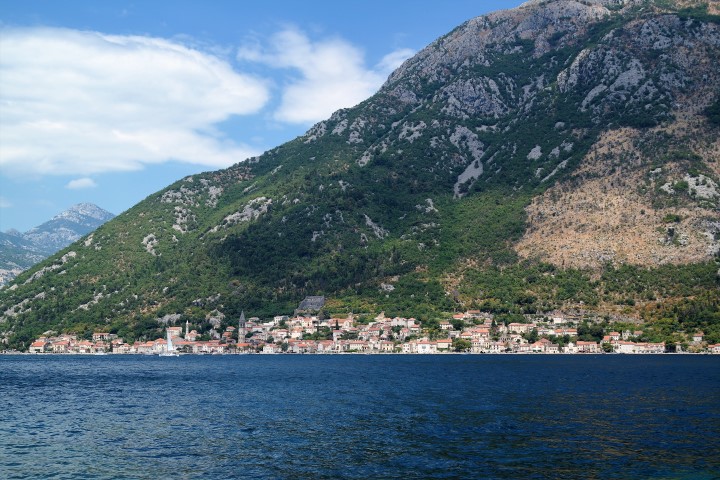
Perast is a village lost in a different world. Artists set up their easels there. We accepted the beckoning invitation to cool off in the clear water of the bay. We also succumbed to the invitation to have dinner at a white tablecloth restaurant that included a magnificent chardonnay and sunset.

SAMSUNG CSC
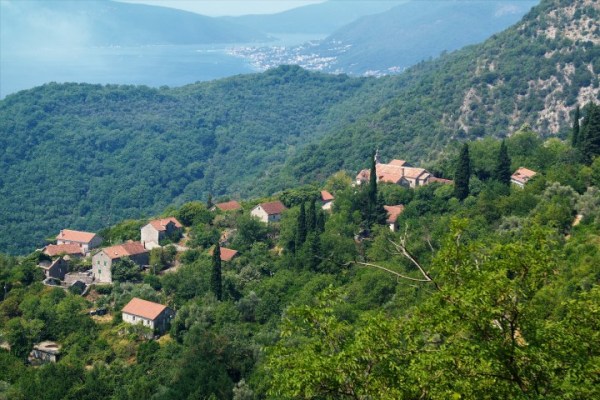
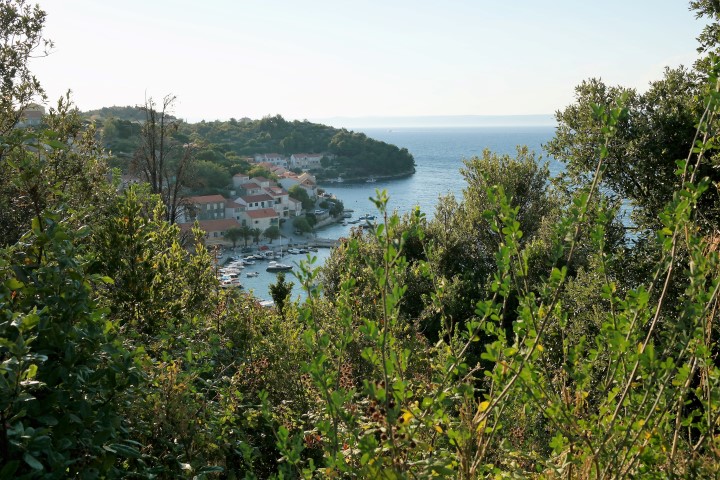
The village of Perast in the Gulf of Kotor

Seeing a Blue-Line bus in the distance coming closer to the town, we snapped out of paradise and waived to the waiter that we wanted to pay the bill. Too late. We relaxed again. The next one will be there in 30 minutes.

After 2 hours of waiting there was still no sign of the Blue-Line bus. And this time also no taxis to bail us out. Eventually the bus came around the corner, we got on, even though the driver said that he did not go where we needed to be. From some of the co-passengers we learnt that the last bus stop is about 5km from where we need to catch the ferry to the other side of the bay and our apartment. We end up walking along the windy road hugging the shoreline in darkness, except for Kali’s headlight that flashes red to warn oncoming cars of our presence. Exhausted we get back home 18 hours after we closed the door behind us.

We have coined a few new phrases during our travels thus far:

–          As interesting as Chan-Chan (very uninteresting)

–          As nauseating as the bus from Lima to Cuzco (very, very nauseating)

–          So hungry I can eat guineapig (very, very, desperately hungry)

In Montenegro, we have added two more expressions to the list:

–          As dependable as a Blue-line bus; and

–          As friendly as a Montenegrin shop assistant (but that is another story).

– Jarik –


Fortified cities

Author: Jarik

Our time in Croatia and Montenegro included a few days in three medieval cities. These were fortified as key ports during the rule of the Venetian Maritime Empire that came into power in the Adriatic nearly a thousand years ago. Dubrovnik was impressive in its scale and, with its beautiful white limestone buildings and shiny paved streets that rise up from the blue-green ocean, one can understand why it is a popular tourist destination. Too popular for my liking. Way too many of our photos captured other people taking photos! The whole city revolved around the tourists and every square inch was either a museum, restaurant, souvenir shop or accommodation of some sorts.  Korčula city was a very tiny version of Dubrovnik.

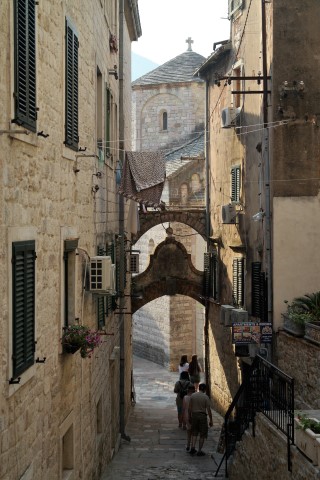
But hidden away, deep in the furthest corner of the Bay of Kotor and under the shadow of towering mountains, we found the real thing! Kotor city is authentic. The clothes of whole families adorn the washing lines strung between the balconies in the narrow alleys. Doors open up to kitchen tables and there are hardware stores between the bakeries and street cafes.

SAMSUNG CSC

Although we were there in “high season” there were refreshingly few tourists and the few that were there were either domestic vacationers or Russian. We wandered the streets, walked on the city walls (from where some local boys were fishing), had a beautiful dinner on one of the city squares and enjoyed the festive sounds of street musicians. I took a few moments to reflect on the lives of thousands of people that stood where I was now standing, in a tiny church frequented by residents and travellers for over a thousand years. I was struck how the walls that were built around these people defined who they were, where they went and how they lived. It provided protection but also separated and isolated. Some things never change.


– Jarik –
 

Bundu Bashing in Korčula

Author: Kali & Jarik

Kali: We were moving from a small town called Omiš, just out of Split, to one of the islands, Korčula. We took a ferry ride from Split to a tiny town on the island. From there we took a public bus. The driver was very unfriendly, and said he didn’t even know of the little town we were heading to, called Račišće. [Ra-chi-che]

Jarik: Thus far on our adventure, we have had a number of truly memorable travel experiences. This turned out to be one of them. We were supposed to get an Uber from our apartment in Omiš to Makarska, a town 20km further south along the coast. From there we were to catch a ferry to the island of Korčula. From Korčula Town, a regular local bus service could take us to our destination. It was all very straight forward. However, Uber dried up in Omiš; we eventually took a bus north to Split;  got a much longer ferry ride to Vela Luka (on the other side of Korčula island) and boarded a bus not really going to where we wanted to go…

Kali: MapsMe showed a walking trail from Pupnat, a town that the bus passes through, to Račišće. It was around 4km, all downhill, and it would take us about 50 minutes to reach our destination. This was absolutely nothing compared to hikes that we have done before, even with all our luggage. So we ended up getting off the bus at Pupnat. (The Afrikaans readers will enjoy the name!)

Jarik: Four kilometres – a breeze, although it was now about 1pm. There was even a sign indicating the walking trail close to the bus stop where we got off.

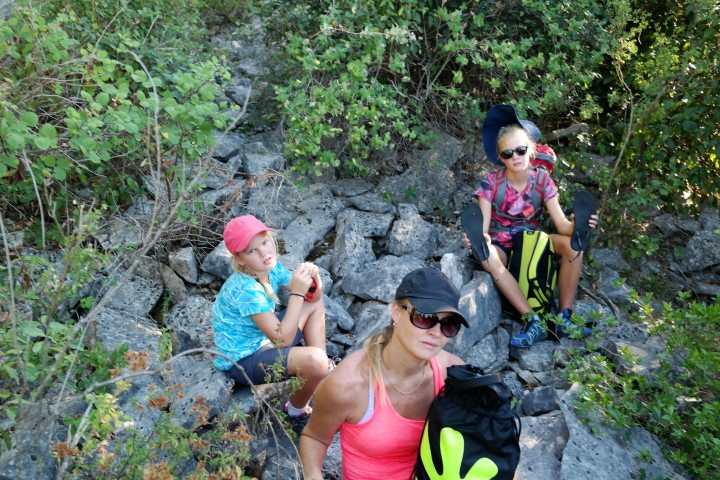
Kali: I started off walking in my flip flops (thongs) as I imagined this to be a comfortable walk. However, we had to get over massive boulders and rocks, and my flip flops didn’t even last a full hour. They had completely disintegrated and were totally useless. Disheartened, I dug out my runners from deep in my bag, and put them on my black, bleeding feet. Then we came to a really bushy and scrubby part of the trek. Also notice how I said my other shoes didn’t even last an hour, that is because by now we have been walking for more than two hours and the GPS showed that we still had 2.3kms to go!

SAMSUNG CSC

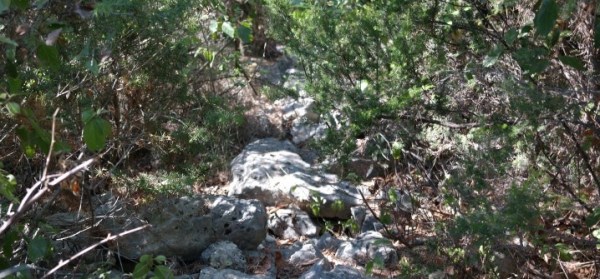
Jarik: About 500m outside the village, the walking track gave way to a very rugged and rocky trail that was heavily overgrown. It was also by now apparent the “downhill walk” was actually quite a steep descent towards the glistening blue ocean that was very far off in the distance!

Kali: Our slow progress was not because we are slow hikers, but because we had wandered through various fingers splitting off from the track, all with our heavy backpacks. MapsMe couldn’t detect our location precise enough to be able to follow the track. Four hours passed and by now we were not only fighting our way over the boulders and rocks, but had a run-in with some aggressive bees as well – I got stung twice! We ended up just making our own trail through thick thorn bushes. Our legs, arms, faces, hands, feet and backs got badly scratched and our shirts and backpacks were also torn. It was horrendous! What made it even worse was that, after the 1st hour and in the middle of the day, all our water had completely run out and there was no house or farm in sight.

Jarik: After the second hour of very slow progress, following what seems to be the overgrown ruins of a winding rock boundary wall of some sorts, Mariza and I both realised that we still had a couple of hours of hard going ahead of us. It would be too difficult to go back the way we came. The only alternative was to continue pushing through the thorny shrubs and vines to slowly find a way to the bottom. We were totally ill prepared and just hoping that we would make it down before dark. Everyone was tired and hungry but we had to make sure that our troop’s attitude remained positive or we would never get there.

Kali: We all celebrated, some even cried, as soon as we stepped onto the dirt road that meant civilisation was within reach. This was definitely one of the most challenging treks that we have ever done. It took us more than five hours! I was feeling very sick at this stage. (We only had oatmeal in the morning and dry bread earlier in the day with very little water through the heat.) We climbed through a fence to fill our water bottles at an abandoned house and continued down the single lane road towards Račišće. Our apartment was delightful. It was such a relief to find a clean, neat and beautiful little apartment close to the cool blue ocean! We had an amazing welcome from our incredible hosts. From the picture to follow, you’ll see why the first thing we did was swim!!!

SAMSUNG CSC

Jarik: I am so proud of my family! Not a single part of the day’s journey worked out as planned. We had to just adjust and find a way, even if it meant doing one of the toughest “hikes” we had ever done. The rewards were spectacular. Račišće is a forgotten  little piece of paradise in a beautiful corner of the crystal ocean. The conversations during and after the day’s ordeal were absolutely priceless. How fortunate we are to share this with our children.

Until next time,

– Kali –

– Jarik –


Travel by numbers

Author: Jarik

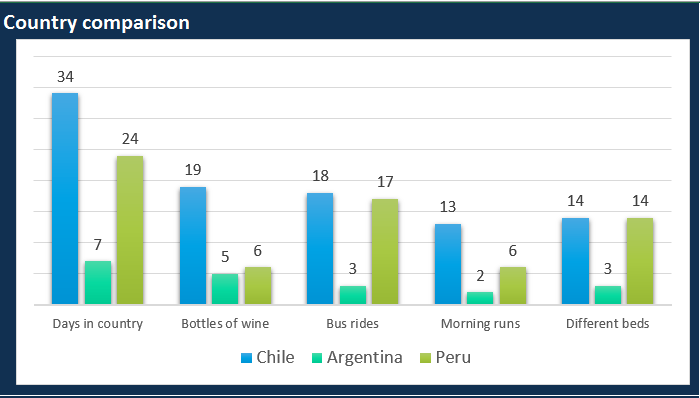
We have now been “in transit” for seventy days in South America and have just entered our fourth country (Ecuador) three days ago. We have travelled from the southern most tip of South America and are closing in on the equator which we will reach in Quito, our last stop on the continent. Thus far we have covered an impressive 622km on foot and have spent a night in 32 different beds. We have also been in a bus, car, boat, tuk-tuk or taxi 63 times. We are also happy to report that we rid the planet of 31 bottles of wine during the process.

Countries (1)

Our travel data shows a strong correlation between the number of bus rides and bottles of wine consumed in Chile and Argentina (1.1 and 1.7 bottles/bus respectively). The relationship deteriorated significantly to only 0.4 in Peru. This is partly due to the wines from Peru’s Ica Valley not falling easily on our palate and our introduction to pisco sour. We have plans in place to rectify this and trust that we will be able to improve the ratio in countries to follow.

–  Jarik –

The price of coffee in Peru

Author: Jarik

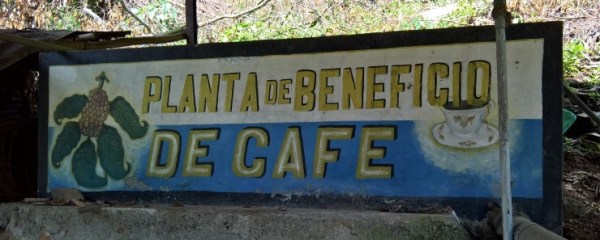
We met Grandma Thomase during our stay with the Andean family in the Peruvian highlands. Actually, we stayed in her house and on her farm as we were hosted by her daughter and her family. No one is sure of her age, but everyone agree that she is around ninety. She and her husband have been part of the activities on the 6ha farm perched on the forested slopes for as long as anyone can remember (seventy years or so). They started as hired hands in their twenties, working the coffee, cocoa and pineapple plantations and staffing the kitchen of the hacienda. Around fourty years ago, they became the owners of the land – purchased through hard work. They have invested a lifetime in these steep fertile slopes.

When we were introduced to Grandma Thomase, she was busy skinning coffee beans with the manual husker/grinder. She was processing her harvest that she hand-picked earlier in the morning. Later the afternoon we saw her wash and select yesterday’s harvest that has by this time fermented and is now ready to be dried in the sun for a couple of days. She produces about 50kg of dried coffee beans per week during the harvest season – 100% Organic – because there are no other means available. The bag of raw coffee beans is taken to the local market in Quillabamba once a week by hitching a ride on the back of a pick-up.

Coffee merchants purchase bags of coffee from the subsistence farmers, making up larger parcels. These are transported to larger centres and changes hands a few times until it reaches Lima where it is acquired by export merchants and roasters that make the precious produce available to espresso and latte drinkers all over the world.

Globally, coffee consumption has risen 18% over the past 10 years, reaching 9.1Mt in 2016. Being a globally traded commodity, new and cheaper production capacity, mechanisation and concentration of production has driven coffee prices lower and global inventory higher regardless of increase in demand. Improvement in yields and input costs are required to satisfy the requirement for returns to the investors. One strategy producers are following is to differentiate to extract higher prices – speciality roast, flavour selected, single origin, fair-trade and now even barrel aged (similar to wine and whisky courtesy of Nestle).

Grandma Thomase gets ~USD80 for her 50kg bag of coffee. The price has been higher in the past but without direct access to the market, she is at the mercy of the merchants and transporters. Her land is not conducive to mechanisation and she has no access to capital.

I was very encouraged to stumble upon a government sponsored agricultural expo during our stay in Chachapoyas. It showcased very basic equipment and opportunities for mechanisation and yield improvements clearly aimed at the small-scale farmer. This, as well as infrastructure development to improve access to markets and reduce transportation costs are required to remain competitive. To stimulate this, investment is needed.

Grandma Thomase gets just more than USD0.01 (yes one cent!) of the USD3.50 for a cup of coffee we buy, yet she has invested seventy years in its production. Transition is never without cost, whether it be physical, emotional, or in the case of Grandma Thomase’s coffee in Peru, economical.

–  Jarik –


Lazy at Llanquihue – Chile

Author: Jarik

15 April

We spent a magical couple of days 24.780km outside of Puerto Varas along the shore of Lago Llanquihue (“yan-key-way”), the largest lake in Chile. We know the exact distance, as this is what you let the bus driver know when you take the local bus from Puerto Varas to Ensenada, the next closest town down the 280km of lake shoreline. Magical, because of the beautiful surroundings. Timber shingle homes, apple trees bountiful with the last fruits of summer, raspberries and murta berries, green pastures with sheep, cattle and alpacas, a lake where every rock and boulder is visible through the clear water and the ever present Osorno volcano – keeping guard over it all. The area is a favourite domestic vacation destination and the lake shore and hills are dotted with lodges, cabanas and fishing cabins.  There is a strong German heritage in the area, reflected in the architecture and the names of buildings and shops in the very pretty town centre.

Spending an afternoon with the people I love, sitting on large boulders along the water’s edge, kids exploring the coves with paddleboards, I cannot help reflecting on what we value and how we choose to shape our lives around that. I am sure that there is room for an additional couple of cabanas in the area, or perhaps an apple cider micro-brewery?

– Jarik –

The pinnacle

Author: Jarik

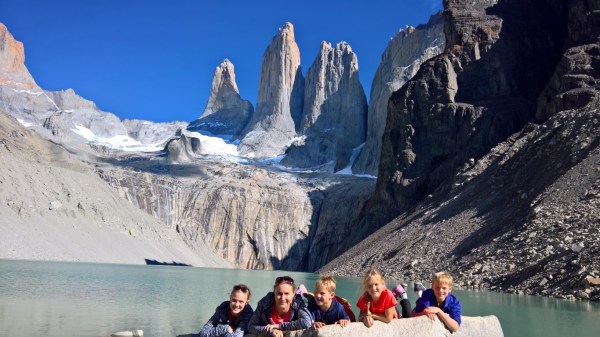
You can fill a thousand postcards with the vast landscapes of Patagonia. We were blessed to experience this spectacular treasure of nature in perfect weather and with the colour of autumn in the trees. Our 10km (one-way) hike from the Cerro Norte Refugio (lodge), where we spent our first night, to the base of the Torres del Paine (three towers) was truly breathtaking. The hike follows the course of a crystal clear river, taking you deep into a valley flanked by large, rugged black mountains with snow capped peaks. Every rise or bend holds a surprise as the trail twists slowly upwards through forest and over boulder strewn clearings. At some points the path barely clings to the steep sides of the black shale with the river negotiating a path through the landscape far below. After about 9km’s, the trail makes a sharp left turn and then basically follows the flow-path of an ice-melt stream, gaining 180m in elevation over very rough terrain. We pursue the seemingly vertical, wet path over white boulders, upwards towards a large field of rock debris high up in the mountain. The views towards the valley below are spectacular. And then, climbing around another large boulder, the “torres” in full view. Nothing can prepare you for the majesty of seeing the white spires towering another 2000m above you  against the blue sky and surrounded by black mountains. Their blue glacier lake contributes to the sense of sacredness, with the vertical cliffs being so close, but yet still unattainable on the other side of the icy water.

– Jarik –

Blog at WordPress.com.

Up ↑